Last updated October 2026
Most cars sold in New Zealand over the last several years come with driver assistance features: lane-keep assist, autonomous emergency braking, adaptive cruise control and blind-spot monitoring. They rely on cameras and radar that have to point in exactly the right direction to work. After a windscreen replacement, a bumper repair or even a wheel alignment, those sensors often need recalibrating. This guide explains what ADAS calibration is, when your car needs it and what happens if it is skipped.
★View the Best Panel Beaters in Auckland→What ADAS is
ADAS stands for Advanced Driver Assistance Systems. The common ones are:
- Lane-keep assist and lane departure warning, using a forward-facing camera behind the windscreen.
- Autonomous emergency braking, using the camera, a front radar, or both.
- Adaptive cruise control, which keeps a set gap to the car ahead using radar.
- Blind-spot monitoring and rear cross-traffic alert, using radar sensors in the rear bumper corners.
- Parking sensors and surround-view cameras, mounted in the bumpers, mirrors and grille.
Each system reads the road through its sensors. If a camera is aimed a fraction of a degree off, it can misjudge where the lane lines or the car in front actually are.
What calibration means
Calibration is the process of aiming and teaching the sensors so the car’s computer knows exactly where they are pointing. There are two main methods, and many vehicles need one or both:
Static calibration
- How it works
- Targets with set patterns are placed at precise distances and angles in front of or around the car, and the system is calibrated to them
- Where it is done
- In a workshop with a level floor and controlled space
Dynamic calibration
- How it works
- The car is driven on suitable roads at set speeds while the system recalibrates itself from real lane markings and traffic
- Where it is done
- On the road, following the manufacturer’s procedure
A diagnostic scan before and after the work confirms which systems are fitted, shows any fault codes and checks the calibration has been accepted.
When your car needs it
Recalibration is commonly needed after:
- Windscreen replacement, because the forward camera is mounted to the glass.
- Front or rear bumper repair or replacement, where radar and parking sensors sit.
- Collision damage near cameras or sensors, even if the sensor itself looks undamaged.
- Suspension work or a wheel alignment, because they change the angle the car sits at.
- A driver-assistance warning light appearing on the dash.
The manufacturer’s repair information sets out when calibration is required for a particular model, and many brands require it after any of the jobs above.
What happens if you skip it
A misaligned camera or radar does not always throw up a warning. The car may seem fine on the drive home, but the systems can behave wrongly when they are needed:
- Emergency braking that triggers late, too early, or not at all.
- Lane-keep steering the car towards the wrong part of the lane.
- Adaptive cruise misjudging the distance to the car ahead.
- Blind-spot warnings missing a vehicle alongside.
On Auckland’s motorways, where traffic speeds up and bunches quickly, these systems are only an aid if they are working the way the manufacturer intended.
Does insurance cover ADAS calibration?
When recalibration is required as part of an insurance repair, such as after a collision or a windscreen claim, it is normally included in the repair. Make sure it appears on the quote or assessment so it is not missed. If you are paying privately, ask for it to be itemised so you can see what is being done.
Questions to ask your repairer
- Does this vehicle have ADAS features that will need calibrating after the repair?
- Will the calibration be static, dynamic or both, and is it done to the manufacturer’s procedure?
- Will I get a pre and post-repair scan and a calibration report?
- Is the calibration included in the insurance assessment or the private quote?
A good repairer will raise ADAS before you have to ask. If a bumper or windscreen job on a late-model car does not mention calibration at all, it is worth asking why.
ADAS calibration at Evoke Bodyworks
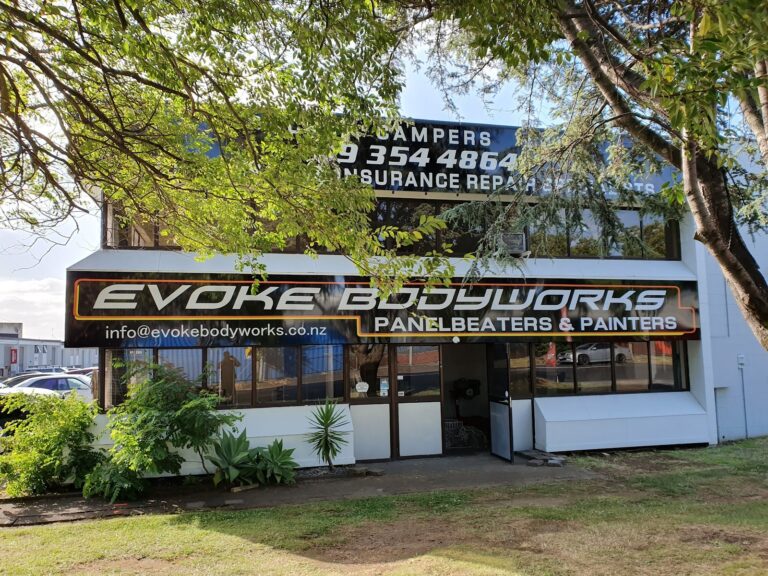
Evoke Bodyworks in Ōtāhuhu offers ADAS recalibration after collision repairs, windscreen replacement, bumper repairs and wheel alignments. The service covers forward-facing camera calibration for lane-keep and traffic-sign recognition, front radar calibration for adaptive cruise and emergency braking, blind-spot and rear radar calibration, and parking sensor and surround-view camera checks. Both static and dynamic procedures are used, with pre and post-repair diagnostic scans and a calibration report. When calibration is part of an insurance repair, the team includes it in the quote and assessment. Evoke is on Saleyards Road in Ōtāhuhu and can be reached on 09 354 4864.