Last updated October 2026
Rust is one of the most common reasons an Auckland car fails its Warrant of Fitness, and one of the most misunderstood. A bubble under the paint on a wheel arch might look cosmetic, but if the same corrosion sits near a seatbelt anchor or suspension mount, the car will not pass until it is properly repaired. This guide covers where rust comes from, what an inspector looks for, how a proper repair is done and what to expect if your car fails.
★View the Best Panel Beaters in Auckland→Why Auckland cars rust
Auckland is surrounded by sea. Salt air drifts across the isthmus from both harbours, and cars that live near the coast, sit outside overnight or launch boats at the ramps pick up salt that settles into seams and under trim. Add the city’s humidity and regular rain, and moisture has plenty of chances to get trapped against bare metal.
Age and history matter too. A large share of New Zealand’s fleet is made up of older imported vehicles, and many have already spent years on the road before arriving here. Stone chips, old accident repairs that were not sealed properly and blocked drain holes in doors and sills all give rust a starting point.
Where to look
Rust usually starts out of sight and shows itself late. The common spots are:
- Sills and rocker panels, under the doors, where water and road grime collect.
- Wheel arches, especially the rear, where the outer panel meets the inner guard.
- Floor pans and boot floors, often hidden under carpet or a spare wheel well that holds water.
- Window and windscreen surrounds, where old seals let water sit against the metal.
- Door bottoms and tailgate lips, behind blocked drain holes.
- Around suspension, seatbelt and chassis mounts, which is where it becomes a WOF problem.
Paint that is bubbling, flaking or showing orange staining is the visible end of rust that has usually spread further underneath.
Why rust fails a WOF
A Warrant of Fitness inspector is not looking at appearance. They are checking that the vehicle’s structure is sound. Corrosion in structural areas, or within set distances of components such as seatbelt anchorages, suspension mounts and steering parts, is a fail because those parts need solid metal to hold in a crash. Rust holes that let exhaust fumes into the cabin, or sharp rusted edges on the outside of the body, can also fail. The NZ Transport Agency sets out what is checked at a WOF inspection.
If your car fails, the inspection sheet will list what needs fixing. You generally have 28 days to have those faults repaired and the vehicle rechecked, so it pays to book the repair quickly.
Treating rust versus repairing it
Not all rust needs the same fix, and the right approach depends on how far it has gone.
Surface rust
- What it looks like
- Light orange staining or a small chip that has started to rust
- Usual fix
- Strip back to clean metal, treat, prime and repaint
Scale rust
- What it looks like
- Paint lifting, bubbling or flaking, metal pitted underneath
- Usual fix
- Remove all corrosion, treat and seal, then refinish
Penetrating rust
- What it looks like
- Holes, crumbling edges, metal that gives when pressed
- Usual fix
- Cut out the affected metal and weld in a new section
The mistake people make is covering rust rather than removing it. Filler, sealant or underbody coating over active corrosion hides it for a while, but the rust keeps working underneath and returns, usually bigger. A proper repair removes every trace of corroded metal before anything goes back on.
How a proper rust repair is done
1. Assessment. The panel beater checks how far the corrosion has spread, which often means removing trim, carpet or seals.
2. Stripping. Paint and rust are taken back to bare metal. Laser stripping is one method that removes rust and coatings precisely without heat warping thin panels or leaving grit in the seams.
3. Cutting out and fabrication. Rotten metal is cut out and replaced with a new section, either a pressed repair panel or one fabricated to shape, then welded in.
4. Corrosion protection. The repaired area and the inside of the panel are treated, and seams are sealed so moisture cannot get back in.
5. Refinishing. The area is primed, painted in the original colour and blended with the surrounding panels.
On structural areas, the repair has to meet the standard required for the WOF recheck, so it is worth using a workshop that does this kind of work regularly.
Will insurance cover rust?
Usually not. Insurance covers sudden, accidental damage, and rust is treated as wear and tear that develops over time. The exception is where rust forms because of damage from an insured event, such as a collision that cracked the paint. If you are unsure, check your policy wording or ask your insurer before booking the work.
What it costs
Rust repair is priced on the extent of the damage and the labour involved, so it varies widely. A small surface spot is a short job, while rotten sills or floor pans can take many hours of cutting, welding and refinishing. A detailed, itemised quote after an inspection is the only reliable way to know, and on an older car it is worth weighing the repair cost against the vehicle’s value before going ahead.
Keeping rust away
- Wash the car regularly, including underneath, especially after beach trips or boat launching.
- Fix stone chips and scratches before they reach bare metal.
- Keep door and sill drain holes clear.
- Check for damp carpets and fix leaking seals early.
- Get an older car’s underside inspected before you buy it.
Getting rust repaired at Evoke Bodyworks
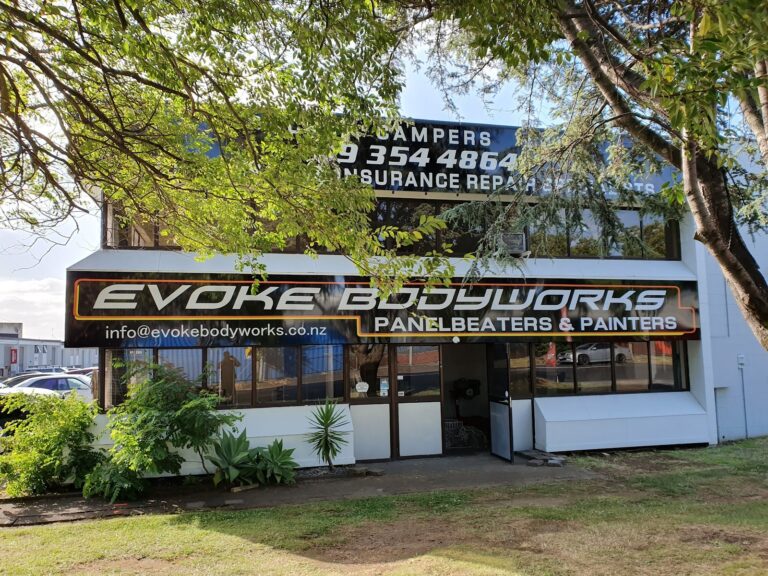
Evoke Bodyworks in Ōtāhuhu repairs vehicles that have failed a WOF or COF because of rust or body damage. Its WOF repair service covers rust cut-out and replacement metal fabrication, sill, floor pan and structural rust repair, corrosion treatment and seam sealing, and refinishing in the original paint, with COF repairs for trucks and commercial vehicles too. The workshop also offers laser stripping for removing rust and paint from panels and seams. Bring your failure sheet in so the team can see exactly what was flagged. Evoke is on Saleyards Road in Ōtāhuhu and can be reached on 09 354 4864.